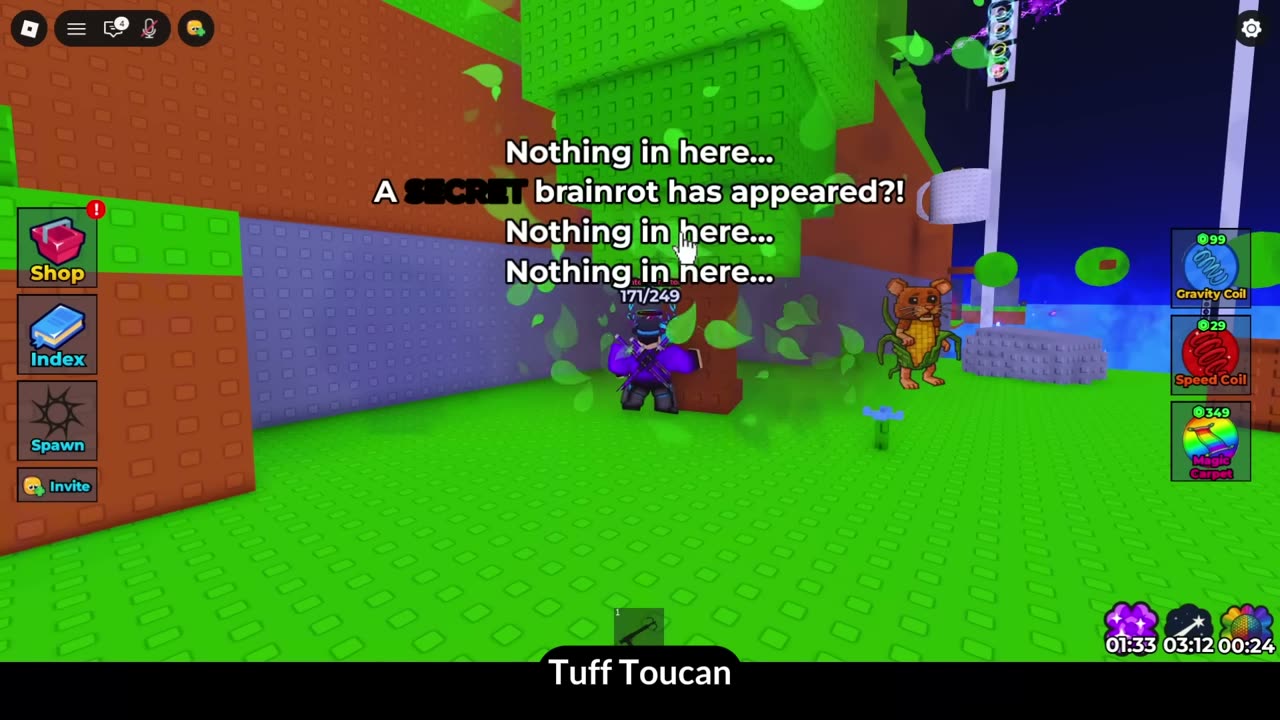
Find the Brainrot Guide
Update 226 is an older snapshot — but the route logic is still useful. Use this to avoid wandering when you’re missing a bunch of mid-tier brainrots.
What is Find the Brainrot?
This find the brainrot 226 guide is a historical baseline: it captures how players cleared a large roster before later expansion pressure. The find the brainrot 226 route logic still works today even if map details changed, because the core routing discipline from this era remains solid. When the game had 226 entries, completion was more about execution than clue management—most brainrots were findable through systematic sweeps rather than puzzle prerequisite chains.
At the 226 stage, players could finish with tighter loops and less index noise. After expansion to 396-style tracking, completion shifted toward clue management, event checks, and late-game cleanup. Using 226 logic as a foundation helps stabilize your pathing. The key difference is density: 226 brainrots spread across the same map area means less hunting per zone, while 396 brainrots means more overlapping spawn points and more trigger conflicts where multiple brainrots share similar interaction patterns.
A strong approach is to treat Update 226 as your control run: test your route speed and miss rate there, then port the same zone order into modern builds. If your final 5-10 entries keep stalling, the issue is usually trigger confirmation, not raw movement. The 226 era had fewer event dimensions (no extensive Halloween content, simpler space area), so portal management was less critical. Modern runs require more dimension-switching discipline because event-exclusive brainrots don't appear in the main map at all.
Route comparison shows that 226-era players spent more time on parkour optimization (because movement was the primary gate) while modern players spend more time on puzzle prerequisite tracking (because interaction gates dominate late-game). For example, the Meowl base existed in the 226 era with the same obby challenges and password gates (72, 70), but fewer players hit it early because the surrounding Secret-tier brainrots weren't as concentrated. In modern builds, the Meowl base is often a mid-game checkpoint because you're hunting Secret-tier entries earlier.
The 226 snapshot is also useful for understanding power creep in difficulty design. Early brainrots (1-100 in the index) were mostly Common/Rare/Epic with straightforward spawn logic. The 226 cap included some Brainrot God and Secret entries, but not the 140-Secret concentration seen in 313-entry builds. If you're teaching someone the game, starting them on a 226-style route (focus on visible spawns, basic obbies, simple puzzles) before introducing event dimensions and complex trigger chains makes the learning curve less brutal.
Practical use case: if you're stuck at 200/313 in a modern build and feeling overwhelmed, mentally reset to "226 mode"—ignore event portals temporarily, skip RNG lucky blocks, and just clear the main map's fixed-location brainrots using zone-by-zone sweeps. Once you hit 226 equivalent progress, then layer in the event dimensions and puzzle prerequisites. This staged approach prevents the common mistake of trying to juggle too many mechanics simultaneously and losing track of what you've already checked. Another benefit: 226-mode runs are faster to complete (20-30 minutes vs 60+ minutes for full 313 clears), so you can use them as practice runs to test new routing ideas or train muscle memory on specific obby sections before committing to a full completion attempt.
| Dimension | Update 226 Baseline | Expanded Tracking Era | Player Impact |
|---|---|---|---|
| Total targets | 226 | 300+ tier (up to 396 references) | Longer cleanup phase |
| Route complexity | Moderate | High | More note-taking required |
| Puzzle/keypad dependence | Medium | Higher | Clue tracking becomes mandatory |
| Event-zone relevance | Limited | Frequent | More portal switching |
| Late-game stall risk | Lower | Higher | Need structured checklist |
The table shows why 226-era strategies need adaptation but not replacement—the fundamentals (zone sweeps, trigger confirmation, parkour execution) remain constant, but the overlay complexity (event dimensions, puzzle prerequisites, RNG gates) requires additional systems.
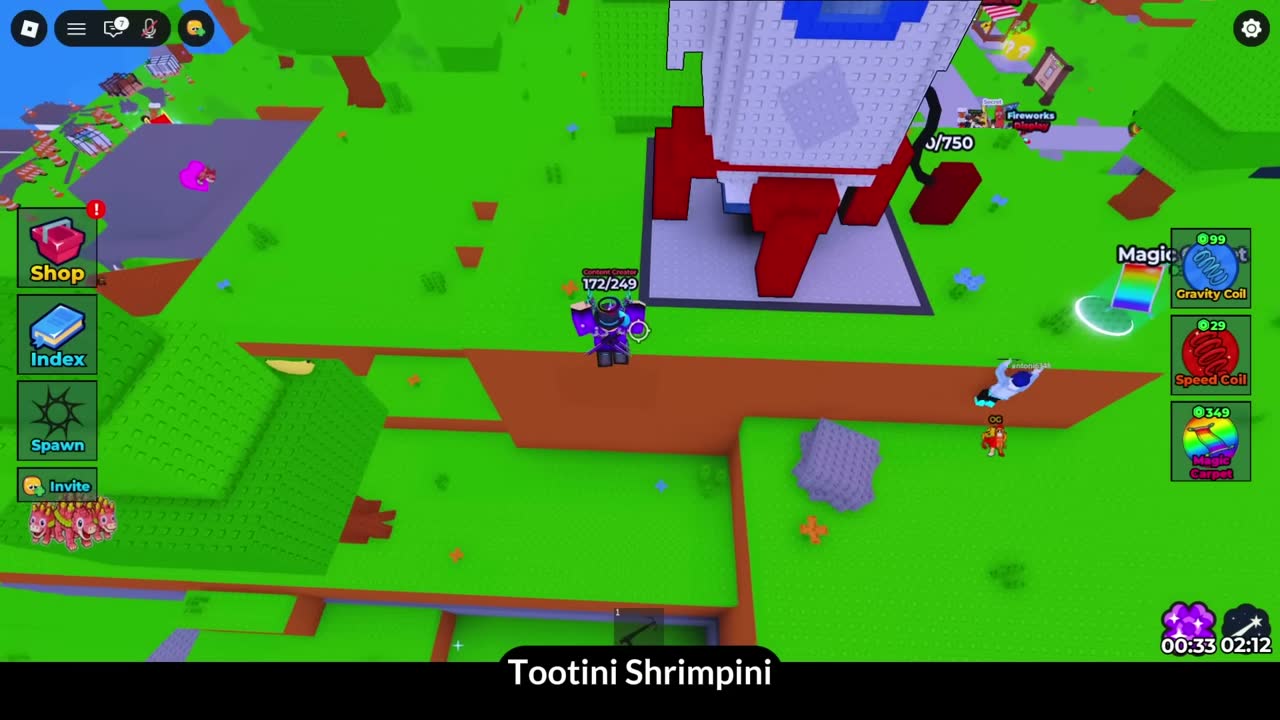
Gameplay Video
FAQ
What is Find the Brainrot 226?
Players use ‘Find the Brainrot 226’ to refer to the older Update 226 completion route (all 226 brainrots). It’s not the current total — it’s a snapshot.
Is Update 226 still the current version?
No. The game has newer updates. Update 226 is best used as a route reference, not as a guaranteed up-to-date total or list.
Why do people still use the ‘all 226 brainrots’ guide?
Because it’s structured: it shows a map sweep order that avoids backtracking. That strategy stays useful even when the total brainrot count increases later.
What if a location from Update 226 doesn’t exist anymore?
Then the map probably changed. Skip that step and move on — don’t get stuck. Use the current Locations guide and the latest update guide for new areas.
Should I follow Update 226 before doing secrets?
Yes. Clear easy and mid-tier brainrots first. Secrets/Brainrot God tier hunts are much faster when your missing list is small.
Does Update 226 include Brainrot God / Secret tier?
Some high-tier entries existed, but newer updates add more. Treat high-tier spots as ‘extra checks’ rather than the backbone of your route.
What’s the next best guide to read after this?
Go to the Locations guide (for structured checklist strategy) and then the latest update guide (Update 396 in our set) to catch newly added brainrots.
A step from Update 226 isn’t working — the area changed or the brainrot isn’t there. What should I do?
Treat Update 226 as a reference and adapt: 1. Skip the missing spot and keep your sweep order. 2. Check nearby walls/edges for a relocated secret entrance. 3. Re-check puzzle hubs (doors/buttons often get redesigned). 4. Rejoin if the trigger won’t fire. 5. Use the latest Locations guide for current checkpoints. 6. Use the newest Update guide for newly added brainrots. Codes not working? Try these steps. If you can't see the trigger, rejoin.
More Games
Looking for more games like this? These picks usually match the same vibe and work well as quick alternatives.